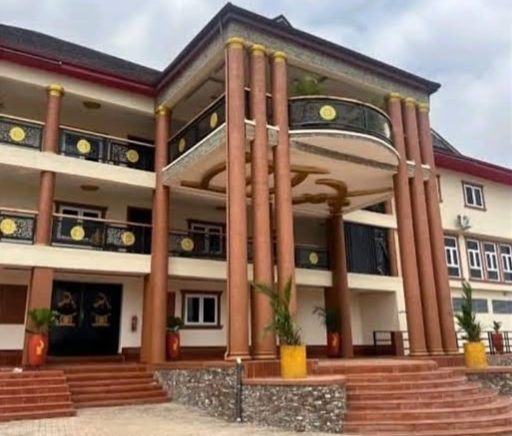
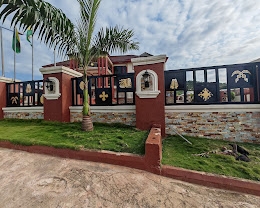
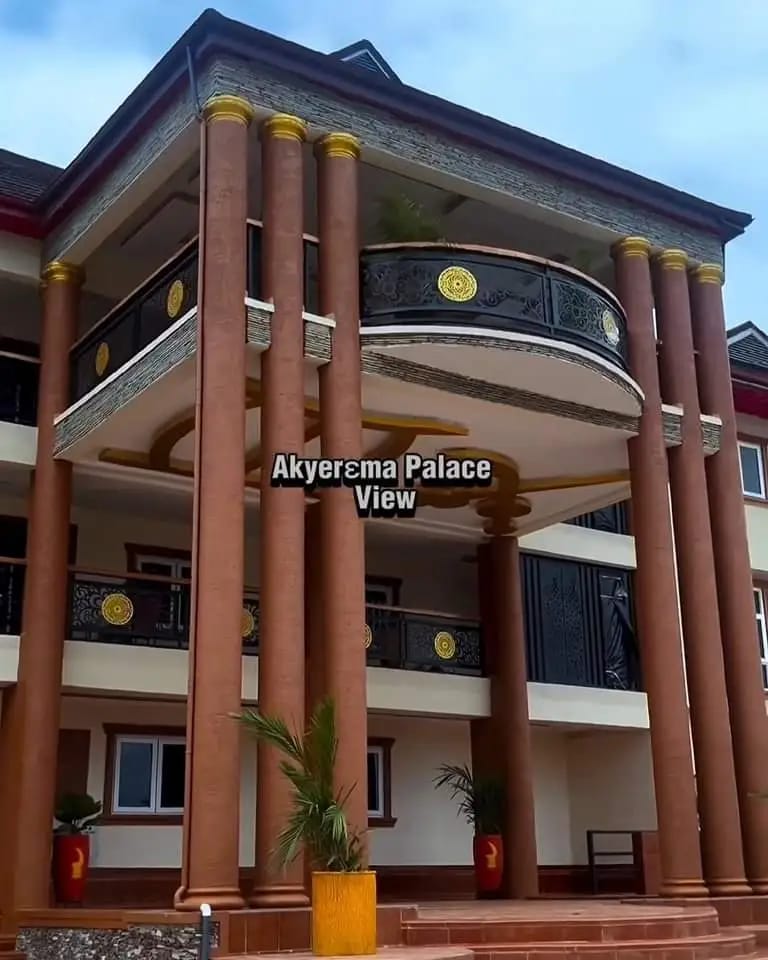
The Kumawumanhene, Barima Safo Tweneboa Kodua, has taken a bold step to renovate and transform the Kumawu Chief’s Palace, popularly known as Akyerema Palace, into a more modern structure that reflects the importance of the Kumawu Traditional Area.
The renovation and restructuring of the palace have significantly changed the appearance of the building, giving it a new and modern look. The improved structure now includes several office spaces and facilities designed to support the activities of the traditional authority and provide a suitable environment for receiving traditional leaders, government officials, community members, and other visitors from Kumawu and beyond.
The transformation of the palace is significant because Akyerema Palace is not simply a building. It is closely connected to the history, culture, traditional leadership, and identity of the people of Kumawu. For generations, the palace has served as an important centre for traditional administration, community engagement, ceremonies, and decision-making.
Akyerema Palace and Kumawu’s Heritage
Akyerema Palace is an important cultural and historical edifice within the Kumawu Traditional Area in the Ashanti Region of Ghana. The palace represents the traditional authority of Kumawu and provides a physical connection to the community’s rich history and heritage.
Kumawu has a long-standing chieftaincy tradition, and the palace remains an important institution within that traditional system. It serves as a place where traditional leaders and elders meet to discuss matters concerning the development, welfare, peace, and unity of the community.
The palace is also associated with important cultural activities and traditional ceremonies. Events connected to the customs and traditions of the people provide opportunities for residents, visitors, and younger generations to learn about Kumawu’s heritage.
The renovation therefore goes beyond improving the physical appearance of the palace. It also provides an opportunity to preserve and present the traditional institution in a manner that is suitable for contemporary community needs.
Major Uses of Akyerema Palace
One of the major functions of Akyerema Palace is its connection with the traditional leadership and governance system of Kumawu. The palace embodies important aspects of the community’s heritage, including its history, customs, traditional regalia, social values, and leadership structures.
The newly improved office spaces can also provide a more organised environment for administrative activities associated with the traditional authority. The availability of dedicated offices can make it easier to receive visitors and conduct official engagements.
The palace can also serve as an important venue for meetings involving traditional leaders, elders, community representatives, and other stakeholders. Such engagements are essential to the preservation of peace, the settlement of traditional matters, and the promotion of community development.
A Cultural and Historical Experience
For visitors, Akyerema Palace can provide an opportunity to learn more about Kumawu and its people. A visit to the palace and other cultural sites within the Traditional Area can offer insight into the history of Kumawu, its traditional leadership, customs, and way of life.
The Kumawu Palace Museum, where available for visitors and cultural activities, further adds to the historical experience by providing an avenue through which cultural artefacts and historical materials can be preserved and presented.
Such artefacts can help tell the story of the people of Kumawu and provide younger generations with a better understanding of their roots. They can also be valuable to researchers, historians, students, tourists, and anyone interested in Ghanaian culture and traditional institutions.
Kumawu: A Place for History, Culture and Adventure
Kumawu is a community with a rich cultural heritage and a history that continues to attract interest from residents, researchers, historians, students, and visitors.
As the newly renovated Akyerema Palace takes on its new look, it stands as an important symbol of Kumawu’s continuing connection between tradition, leadership, history, and modern development.